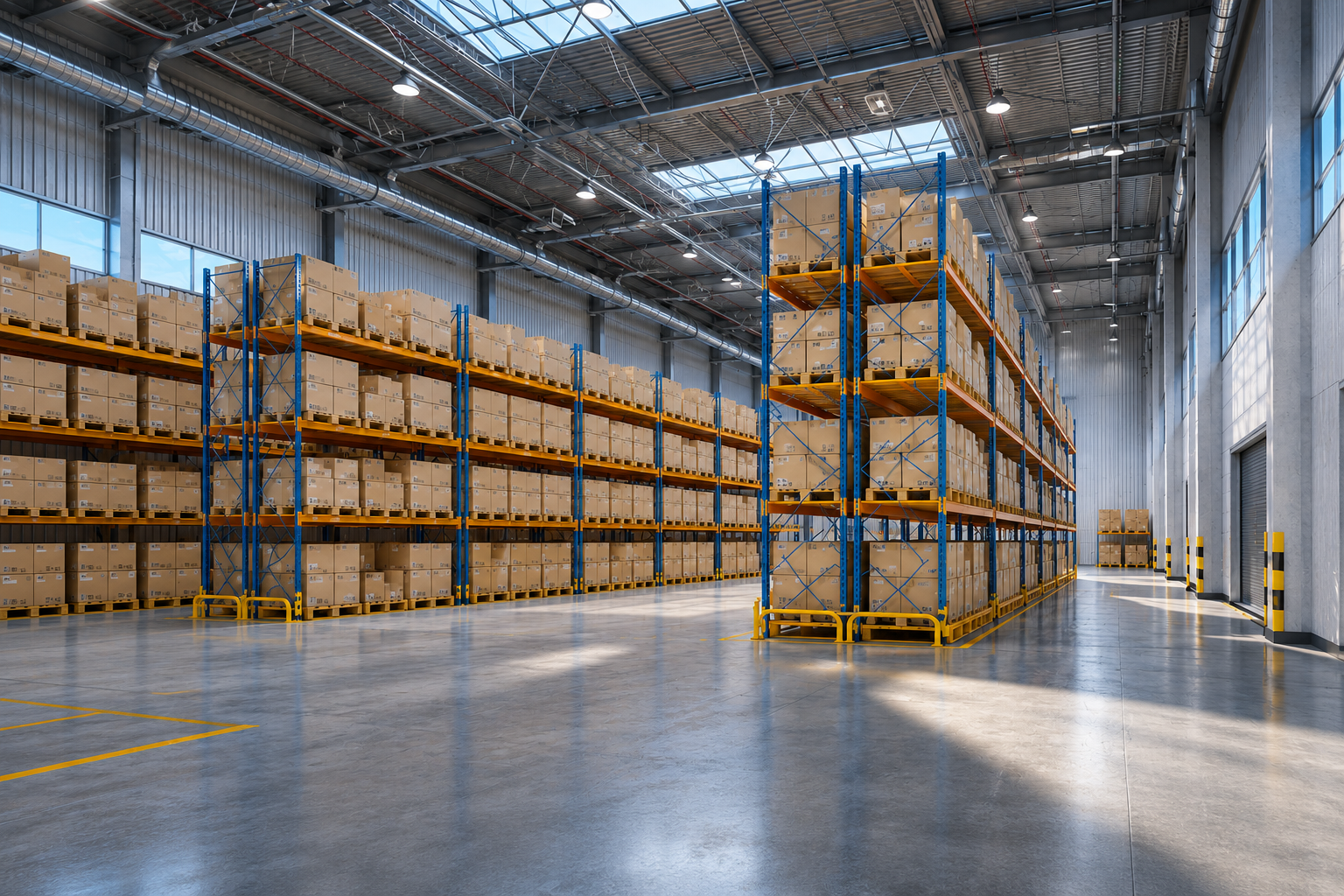

Learn how reducing warehouse travel time improves productivity, accelerates order fulfillment, and increases overall distribution efficiency.
The Problem Most Warehouses Don’t See Coming
When organizations look to improve performance, they often focus on automation, labor, or space constraints. But one of the biggest drivers of inefficiency is much less obvious—and far more common.
It’s walking.
In many facilities, a large portion of labor time is spent simply moving from one place to another. Whether it’s picking orders, replenishing inventory, or transporting goods across zones, excessive warehouse travel time quietly slows everything down.
And in high-volume, complex environments, those extra steps add up fast.
Why Travel Time Has Such a Big Impact
Every second a worker spends walking is a second they’re not picking, packing, or shipping.
That’s why reducing warehouse travel time has a direct impact on:
- Order fulfillment speed
- Labor productivity
- Operational costs
- Overall warehouse efficiency
For organizations under pressure to deliver faster without increasing headcount, this becomes a critical opportunity.
Less travel doesn’t just improve performance, it fundamentally changes how much a warehouse can handle.
It Starts With Smarter Layout Design
Many warehouse layouts are the result of years of incremental changes rather than intentional design. As operations grow, inefficiencies creep in, longer paths, congested areas, and disconnected workflows.
Reducing travel time starts by rethinking how the space is organized.
A well-designed layout prioritizes flow:
- Fast-moving inventory is positioned closer to packing and shipping
- High-activity zones are located near each other
- Travel paths are direct and easy to navigate
Instead of forcing workers to zigzag across the facility, the goal is to create a natural, streamlined movement from task to task.
Even modest layout improvements can unlock meaningful gains in warehouse efficiency.
The Power of a Strategic Slotting Approach
If layout defines the structure, slotting defines how effectively it’s used.
Slotting is the practice of placing inventory in locations that make picking as fast and efficient as possible. When done strategically, it can dramatically reduce warehouse travel time.
High-frequency items should be:
- Easy to access
- Close to packing stations
- Grouped with other commonly picked products
Meanwhile, slower-moving inventory can be stored in less accessible areas. Advanced operations take this a step further by using data to continuously refine slotting decisions based on real picking behavior. The result is fewer steps, faster picks, and higher fulfillment productivity.
Rethinking Material Flow Across the Warehouse
Beyond layout and slotting, material flow plays a major role in how efficiently a warehouse operates.
In many facilities, products don’t move in a straight line. They double back, cross paths, or wait in staging areas longer than necessary. Optimizing material flow means creating a more logical, continuous path from receiving to shipping.
That might include:
- Reducing cross-traffic between zones
- Aligning inbound and outbound processes
- Introducing conveyors or automation to minimize manual movement
When flow is optimized, the warehouse begins to function less like a series of disconnected tasks and more like a coordinated system. This is where true warehouse workflow optimization takes shape.
Technology That Reduces Movement and Increases Speed
Technology plays a key role in minimizing unnecessary travel. Modern warehouse management systems (WMS) can guide workers along the most efficient pick paths, reducing wasted steps and improving consistency. Tools like voice picking and wearable devices further streamline execution, allowing workers to move faster with fewer interruptions.
Real-time data also makes it possible to identify inefficiencies and adjust operations dynamically, something that’s essential in complex distribution environments.
When technology supports the operation effectively, it amplifies every improvement made in layout, slotting, and flow.
Small Changes, Big Impact at Scale
In smaller operations, a few extra steps might not seem like a big deal. But in large, high-volume facilities, those inefficiencies multiply quickly.
Reducing warehouse travel time even slightly can lead to:
- Significant increases in throughput
- Noticeable improvements in labor productivity
- Faster, more reliable fulfillment
For organizations managing complex supply chains, these gains can translate directly into competitive advantage.
Why This Matters for Modern Distribution Networks
Today’s supply chains demand speed, accuracy, and flexibility all at once. Reducing travel time supports all three.
It allows organizations to:
- Fulfill orders faster without expanding their footprint
- Make better use of existing labor resources
- Improve service levels in an increasingly demanding market
In short, it’s one of the most effective ways to boost performance without adding complexity.
Turning Insight Into Action
While the concept is straightforward, execution requires a deeper understanding of how layout, processes, and systems work together. That’s where Tompkins Solutions comes in.
By analyzing current operations and designing optimized environments, Tompkins helps organizations reduce warehouse travel time, improve fulfillment productivity, and implement scalable warehouse workflow optimization strategies that deliver long-term results.
Moving Faster by Moving Smarter
Not every improvement requires more space, more labor, or more automation. Sometimes, the biggest gains come from eliminating what isn’t necessary. Reducing warehouse travel time is one of the simplest, and most impactful, ways to improve performance. And for organizations ready to move faster, the path forward starts with rethinking how work moves through the warehouse. Contact Tompkins Solutions today to discuss all warehouse needs.


About Shaun Kelly


How can we help improve your supply chain operations?
Schedule a consultation or contact Tompkins Solutions for more information.
Featured Posts
Discover valuable resources to enhance your knowledge.

.png)