
Introduction
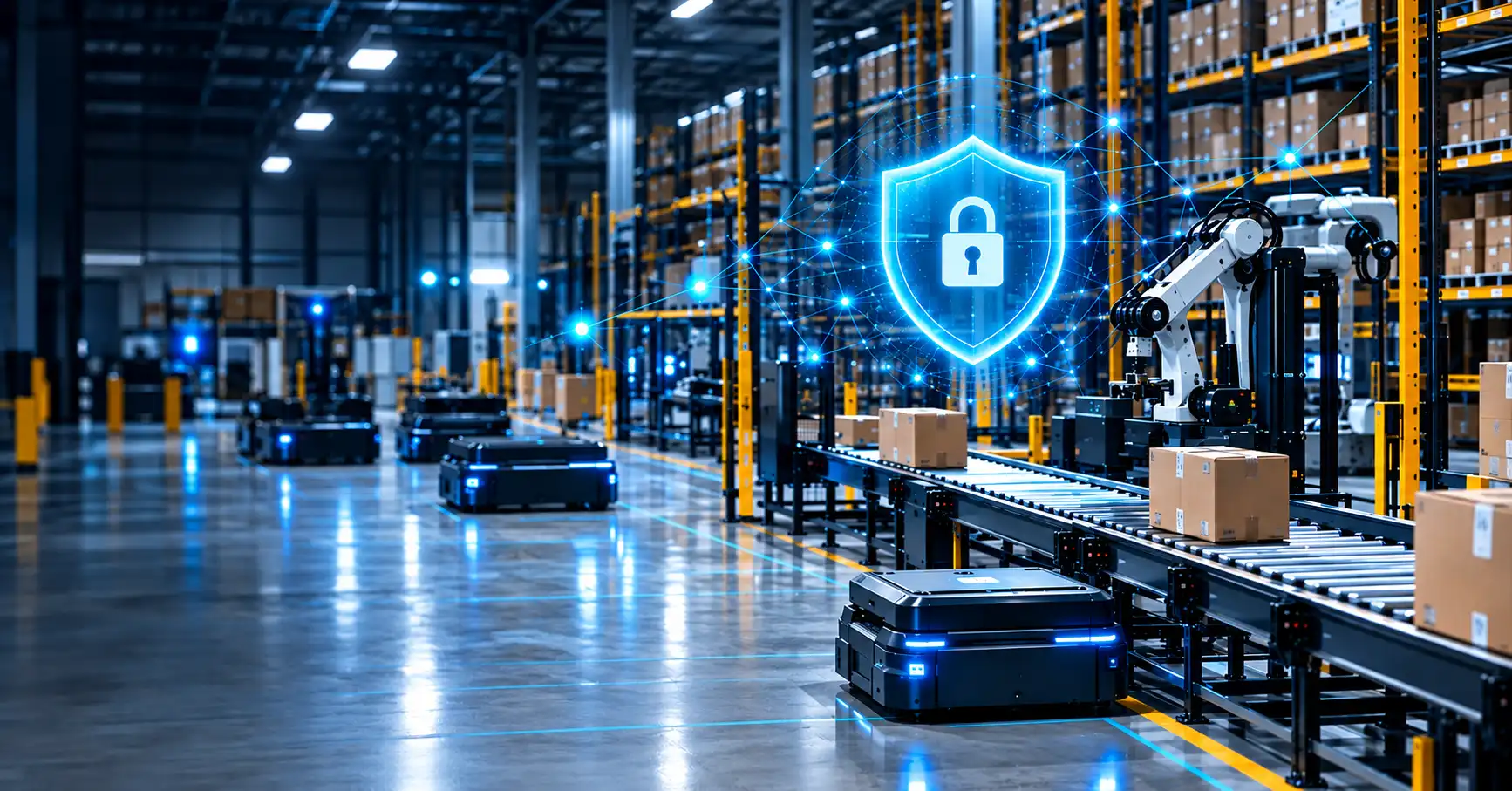
Warehouse automation can improve speed, accuracy, and operational visibility, but connected systems also create more dependencies that organizations must understand and protect. Controls, software, devices, networks, and data may all contribute to the operation. Cybersecurity therefore belongs in the planning conversation, not only after systems are installed.
Understand the Full Technology Environment
A warehouse may include warehouse management and execution systems, controls platforms, sensors, robotics, scanners, workstations, remote support tools, and partner integrations. Each connection can influence operational continuity and security requirements.
A clear architecture map helps teams understand what is connected, what data moves between systems, and which components are critical to daily operations.
Verify Equipment and Site Conditions Before Commissioning
Before functional testing begins, the project team should verify that the physical environment is ready to support the intended operation. This includes confirming equipment installation, mechanical alignment, electrical connections, network availability, safety systems, sensors, labeling, utilities, and required environmental conditions. These checks help identify installation issues before they affect broader process testing. A warehouse automation system cannot be evaluated effectively if supporting site conditions or equipment configurations are incomplete.
Pre-commissioning verification should also confirm that installed components match the approved design and project requirements. Equipment settings, configurations, documentation, and physical interfaces should be reviewed before moving into operational testing. Establishing this baseline gives project teams a clear understanding of what has been installed and provides a reliable starting point for the remaining warehouse implementation activities.
Secure the Network Infrastructure Behind Automation
Warehouse automation depends on networks that allow equipment, controls, software, and business systems to communicate. These networks may connect programmable logic controllers (PLCs), robotics, sensors, scanners, human-machine interfaces, warehouse execution systems, and other operational technology. As more devices become connected, network design becomes an important part of automation security. Teams should understand which systems need to communicate, which connections are essential for operations, and where unnecessary connectivity can introduce additional exposure.
Network segmentation can help separate critical operational technology from other environments while still allowing required data and communication to flow between systems. Organizations can also establish appropriate monitoring and traffic controls around critical equipment and system interfaces. These considerations should be addressed during warehouse automation planning rather than added after implementation. A network architecture that clearly defines communication paths can make it easier for IT, controls, and operations teams to manage connected infrastructure as the facility evolves.
Manage Exceptions, Failures, and Recovery Scenarios
A warehouse operation must be prepared for conditions that fall outside the normal process. Commissioning should therefore include scenarios such as equipment stoppages, incorrect inventory information, unavailable locations, communication failures, rejected transactions, blocked conveyor zones, and manual intervention. Testing these situations helps determine whether the operation can identify an issue, respond appropriately, and continue or recover without creating unnecessary disruption.
Recovery procedures should be evaluated across both technology and operations. Teams need to understand who is responsible for responding to different failures, how issues are escalated, and what information operators need to restore normal activity. Documenting and testing these procedures during commissioning can reduce uncertainty during the transition to production and provide a clearer foundation for ongoing operational management.
Protect Data Across Warehouse Systems
Connected warehouses generate and exchange significant amounts of operational data. Inventory information, equipment status, order activity, performance metrics, production data, system events, and other information may move between warehouse management systems, execution platforms, automation controls, enterprise applications, and external services. Protecting this information requires more than controlling who can access a system. Organizations should also understand where data originates, where it travels, where it is stored, and how it is used throughout the operation.
Data protection should be considered during system integration and technology selection. Appropriate safeguards can help protect information while it moves between connected systems and while it is stored. Organizations should also establish clear requirements for data retention, backup, recovery, and integrity, particularly for information that supports operational decision-making. Taking a structured approach to data protection helps organizations maintain reliable information flows while reducing unnecessary exposure across a connected warehouse.
Address Third-Party and Remote Access Risks
Warehouse automation frequently involves outside organizations. Equipment manufacturers, technology providers, system integrators, software vendors, and service partners may need access to systems for implementation, troubleshooting, maintenance, or remote support. These relationships can provide important operational benefits, but they also introduce additional connections that need to be understood and managed. Each external connection should have a defined business purpose, appropriate permissions, and clear ownership.
Organizations can establish controls around vendor access by using approved accounts, limited permissions, defined access periods, and documented authorization processes. Remote access should be reviewed regularly, particularly after implementation projects or service engagements are completed. Access that is no longer required should be removed, and responsibilities between the warehouse operator and external provider should be clearly documented. These practices help integrate third-party support into the broader warehouse cybersecurity strategy without creating unnecessary access to critical operational environments.
Build Security Into the Automation Lifecycle
Cybersecurity should continue beyond the initial automation deployment. Warehouse environments change over time as organizations add equipment, replace legacy controls, introduce new software, modify workflows, and connect additional systems. Each change can affect existing dependencies and security requirements. Including security considerations in design reviews, system testing, commissioning, and acceptance processes allows teams to identify issues before changes become part of daily operations.
Lifecycle planning is equally important after a system goes live. Software and firmware updates, technology refreshes, configuration changes, service activities, and aging equipment can all affect the security and reliability of an automated facility. Organizations should maintain visibility into system components, document important configurations, and coordinate changes between IT, operational technology, controls, and service teams. A lifecycle approach helps ensure that controls, security,
integration requirements, and operational priorities remain aligned as warehouse technology continues to evolve.
Control Access by Role and Need
Access should reflect job responsibilities. Employees, vendors, integrators, and support teams may require different permissions and different levels of system visibility.
Role-based access, account management, credential controls, and documented approval processes can reduce unnecessary exposure while supporting legitimate operational work.
Plan for Availability and Recovery
Security is not only about preventing unauthorized access. It also includes maintaining dependable operations and preparing for recovery when a system or connection is unavailable.
Organizations should identify critical dependencies, establish response procedures, and coordinate recovery expectations across IT, operations, controls, and service partners.
Include Security in Integration and Upgrades
New automation, software updates, controls changes, and third-party connections can alter the risk profile of a warehouse. Security review should be part of project planning, testing, change management, and acceptance, not a separate activity at the end.
This integrated approach helps organizations consider security alongside performance, maintainability, and operational requirements.
Establish Security Monitoring and Visibility
Connected warehouse environments need ongoing visibility into how systems are operating and communicating. Monitoring can help teams identify unusual activity, unexpected connections, configuration changes, or events that may require investigation. This is particularly important in automated facilities where multiple technologies operate together and an issue in one component can affect downstream processes. Establishing appropriate visibility helps IT and operations teams understand what is happening across the environment without treating cybersecurity as a separate function from warehouse performance.
Monitoring requirements should reflect the operational importance of different systems and the information available from those systems. Teams can define which events require attention, who reviews them, and how potential issues are escalated. Clear visibility also supports collaboration between IT, controls, operations, and service providers when investigating unexpected behavior. By incorporating monitoring into the broader warehouse cybersecurity approach, organizations can maintain greater awareness as connected operations become more complex.
Define Security Responsibilities Across Teams
Warehouse cybersecurity involves multiple stakeholders, and responsibilities should be clear before systems become operational. IT teams may oversee enterprise infrastructure and security controls, while controls engineers, operations teams, automation providers, and system integrators may have responsibilities within specific technology environments. Clearly defining ownership helps prevent gaps where an important security task is assumed to belong to another group.
Security responsibilities should also be documented for implementation, maintenance, system changes, incident response, and vendor support. Establishing these expectations early can make coordination more efficient when issues arise or technology changes are introduced. A shared responsibility model allows cybersecurity requirements to remain connected to operational priorities while giving each team a clear understanding of its role within the connected warehouse.
How Tompkins Solutions Helps
Tompkins Solutions brings IT and data systems planning together with warehouse automation and integration expertise. This helps customers evaluate connected operations as complete environments rather than isolated technologies.
The goal is to support connected warehouse architecture with clearer dependencies, better coordination, and greater confidence throughout the system lifecycle.
Conclusion
Cybersecurity is becoming a core consideration in warehouse automation because operational performance increasingly depends on connected technology. By mapping system dependencies, managing access, planning for recovery, and including security in project execution, organizations can build more resilient operations. Tompkins Solutions helps customers connect warehouse technology architecture with practical operational priorities.
Explore Tompkins Solutions: Connect with Tompkins about your warehouse technology architecture →


About Shaun Kelly


How can we help improve your supply chain operations?
Schedule a consultation or contact Tompkins Solutions for more information.
Featured Posts
Discover valuable resources to enhance your knowledge.

.png)