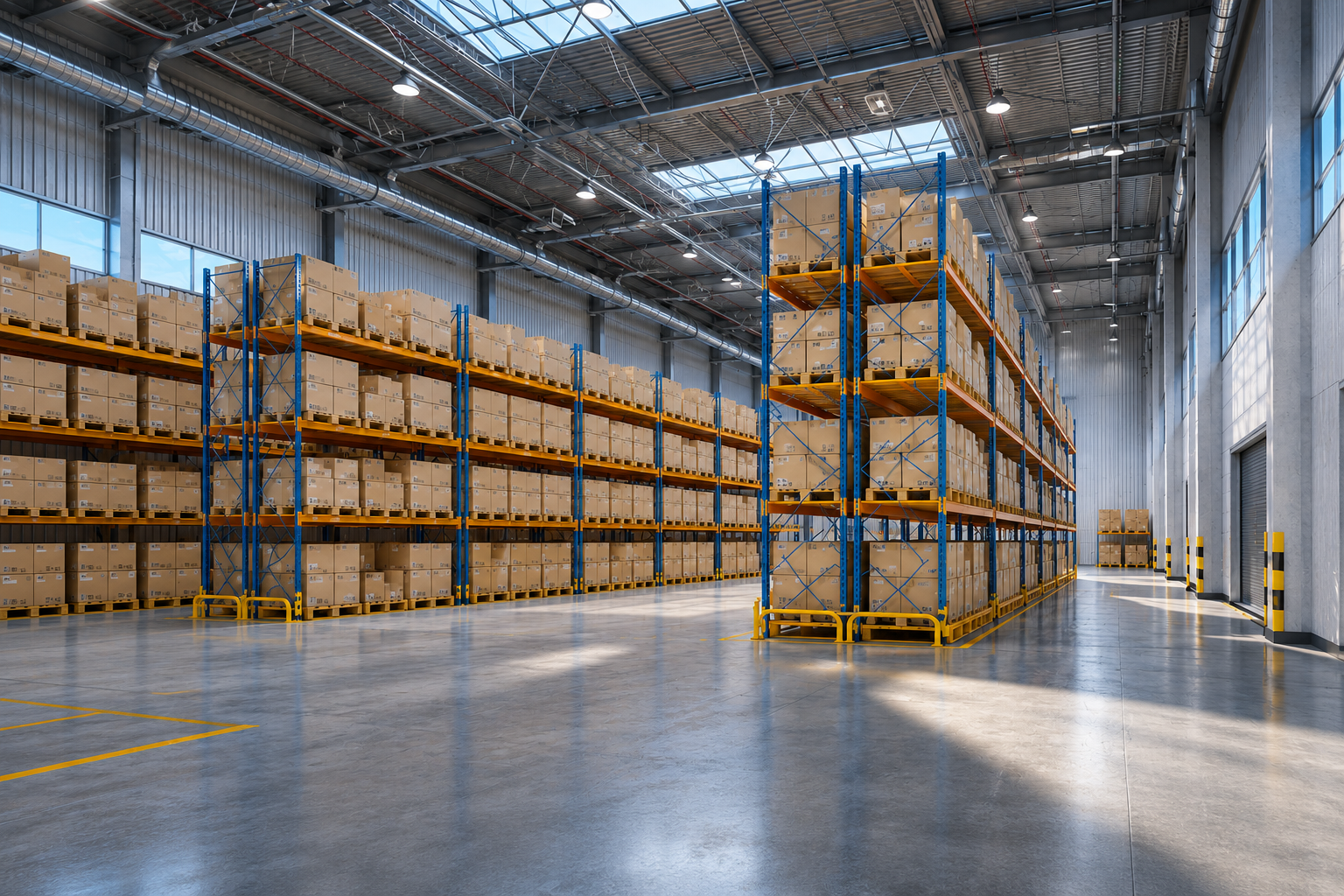

Warehouse Modernization Without Starting Over: How Brownfield Automation Extends the Life of Existing Distribution Centers
Key Takeaways
- Brownfield warehouse automation enables organizations to modernize existing facilities without the cost and disruption of building a new distribution center.
- Strategic automation upgrades improve throughput, labor productivity, inventory accuracy, and operational scalability while maximizing existing infrastructure.
- Successful modernization projects combine automation technologies with software integration and thoughtful facility engineering.
- Phased implementation reduces operational risk by allowing warehouses to continue serving customers throughout the modernization process.
- Tompkins Solutions delivers end-to-end warehouse modernization services from consulting and engineering to automation integration and lifecycle support helping organizations complete projects on time and on budget.
Introduction
Today's distribution centers are under pressure like never before. Customer expectations continue to rise, order profiles have become increasingly complex, and labor availability remains one of the industry's biggest operational challenges. At the same time, businesses are expected to process more orders, support additional sales channels, and improve service levels all while controlling costs.
For many organizations, their existing warehouse simply wasn't designed for today's fulfillment environment. Facilities built years ago may have adequate square footage but struggle with inefficient layouts, manual processes, aging equipment, and software systems that no longer support modern operational requirements.
Historically, companies facing these challenges often believed the only solution was building a new distribution center. While greenfield projects remain appropriate in certain situations, they require substantial capital investment, lengthy implementation timelines, and significant operational planning.
Today, many businesses are taking a different approach.
Instead of replacing their facilities, they're investing in brownfield warehouse automation modernizing existing distribution centers through strategic automation, intelligent software integration, and optimized material handling systems.
This approach allows organizations to improve performance while protecting previous infrastructure investments, minimizing operational disruption, and creating scalable warehouses capable of supporting future growth.
In many cases, the smartest warehouse isn't the newest one, it's the one that's been thoughtfully modernized.
Why Existing Distribution Centers Are Falling Behind
Many warehouses in operation today were designed around business models that have changed dramatically over the past decade. Facilities originally built to support pallet-based replenishment or bulk shipping are now expected to fulfill a mix of e-commerce, wholesale, direct-to-consumer, and omnichannel orders, often within much tighter delivery windows.
As operations evolve, the limitations of legacy facilities become increasingly apparent. Businesses may experience:
- Congested storage and picking areas
- Long travel distances for warehouse associates
- Limited storage density
- Manual material movement between workstations
- Increasing order complexity
- Higher labor costs
- Difficulty meeting peak demand
- Limited visibility into warehouse performance
These challenges don't necessarily mean a warehouse has reached the end of its useful life. More often, they indicate that the facility requires modernization rather than replacement.
By evaluating workflows, material flow, and technology infrastructure, organizations can identify opportunities to increase capacity and efficiency within the existing footprint.
Understanding Brownfield Warehouse Automation
Brownfield warehouse automation refers to the process of integrating modern automation technologies into an existing operational facility. Rather than designing a warehouse from the ground up, businesses enhance current infrastructure to improve performance while maintaining ongoing operations.
Unlike greenfield projects which involve constructing entirely new facilities, brownfield modernization focuses on maximizing existing assets.
A brownfield automation project may include:
- Autonomous Mobile Robots (AMRs)
- Conveyor and sortation systems
- Automated Storage and Retrieval Systems (AS/RS)
- Goods-to-Person technologies
- Robotic palletizing and depalletizing
- Automated picking solutions
- Warehouse Execution Systems (WES)
- Warehouse Control Systems (WCS)
- Warehouse Management System (WMS) upgrades
- Vision and barcode verification systems
The objective is not simply to introduce automation but to create a connected ecosystem where equipment, software, and people work together to improve operational performance.
Why Brownfield Automation Is Gaining Momentum
Organizations across manufacturing, retail, consumer goods, healthcare, and third-party logistics are increasingly choosing modernization over new construction for several strategic reasons.
Maximizing Existing Investments
Distribution centers often represent years of investment in buildings, utilities, storage systems, and supporting infrastructure. Replacing these assets prematurely can significantly increase project costs.
Brownfield automation allows companies to preserve valuable infrastructure while introducing technologies that improve efficiency and extend the facility's lifespan.
Faster Implementation
Building a new distribution center can take several years when considering planning, permitting, construction, equipment installation, and system commissioning.
Modernization projects typically have shorter implementation timelines because the existing building and much of the infrastructure are already in place. This enables organizations to begin realizing operational improvements sooner.
Lower Capital Requirements
Greenfield facilities require substantial upfront investment not only for construction but also for land acquisition, utilities, permitting, and site development.
Brownfield projects often allow companies to modernize in phases, spreading investment over time while delivering measurable improvements after each stage.
Reduced Operational Risk
Relocating warehouse operations introduces significant business risk, from inventory transfers and workforce transitions to customer service disruptions.
With a phased modernization strategy, organizations can continue fulfilling orders while automation is implemented incrementally, minimizing downtime and maintaining service levels.
Technologies That Deliver the Greatest Impact
No two warehouse modernization projects are identical. The right automation strategy depends on business objectives, order profiles, facility constraints, and long-term growth plans.
However, several technologies consistently deliver significant operational improvements in brownfield environments.
Autonomous Mobile Robots (AMRs)
AMRs have become one of the most flexible automation solutions for existing facilities because they require little permanent infrastructure.
Unlike traditional automated guided vehicles (AGVs), AMRs navigate dynamically using onboard sensors and intelligent mapping technology. They transport inventory between storage locations, picking stations, packing areas, and shipping docks while adapting to changing warehouse conditions.
For businesses, this means:
- Reduced employee travel time
- Improved labor productivity
- Greater operational flexibility
- Easier scalability as demand grows
Because AMRs can often be deployed without major building modifications, they are particularly well-suited for retrofit projects.
Conveyor and Sortation Systems
Manual transportation of cartons and products across long warehouse distances consumes valuable labor hours and slows throughput.
Modern conveyor and sortation systems streamline material flow by automatically moving products between operational zones.
Benefits include:
- Faster order processing
- Reduced manual handling
- Lower labor costs
- Improved workplace safety
- Increased shipping accuracy
Today's modular conveyor systems can often be integrated into existing facilities with minimal disruption, making them a practical choice for phased modernization initiatives.
Automated Storage and Retrieval Systems (AS/RS)
When warehouse space is limited, increasing storage density becomes a priority.
AS/RS solutions maximize vertical space by automatically storing and retrieving inventory, allowing organizations to significantly increase storage capacity without expanding their building footprint.
Additional advantages include:
- Improved inventory accuracy
- Faster inventory retrieval
- Reduced product damage
- Better space utilization
- Enhanced inventory visibility
For facilities facing real estate constraints, AS/RS technology offers an effective way to support business growth within existing walls.
Contact Tompkins Solutions to explore how a customized warehouse automation strategy can help modernize your pharmaceutical operations while strengthening compliance, improving fulfillment efficiency, and supporting long-term growth.


About Shaun Kelly


How can we help improve your supply chain operations?
Schedule a consultation or contact Tompkins Solutions for more information.
Featured Posts
Discover valuable resources to enhance your knowledge.

.png)