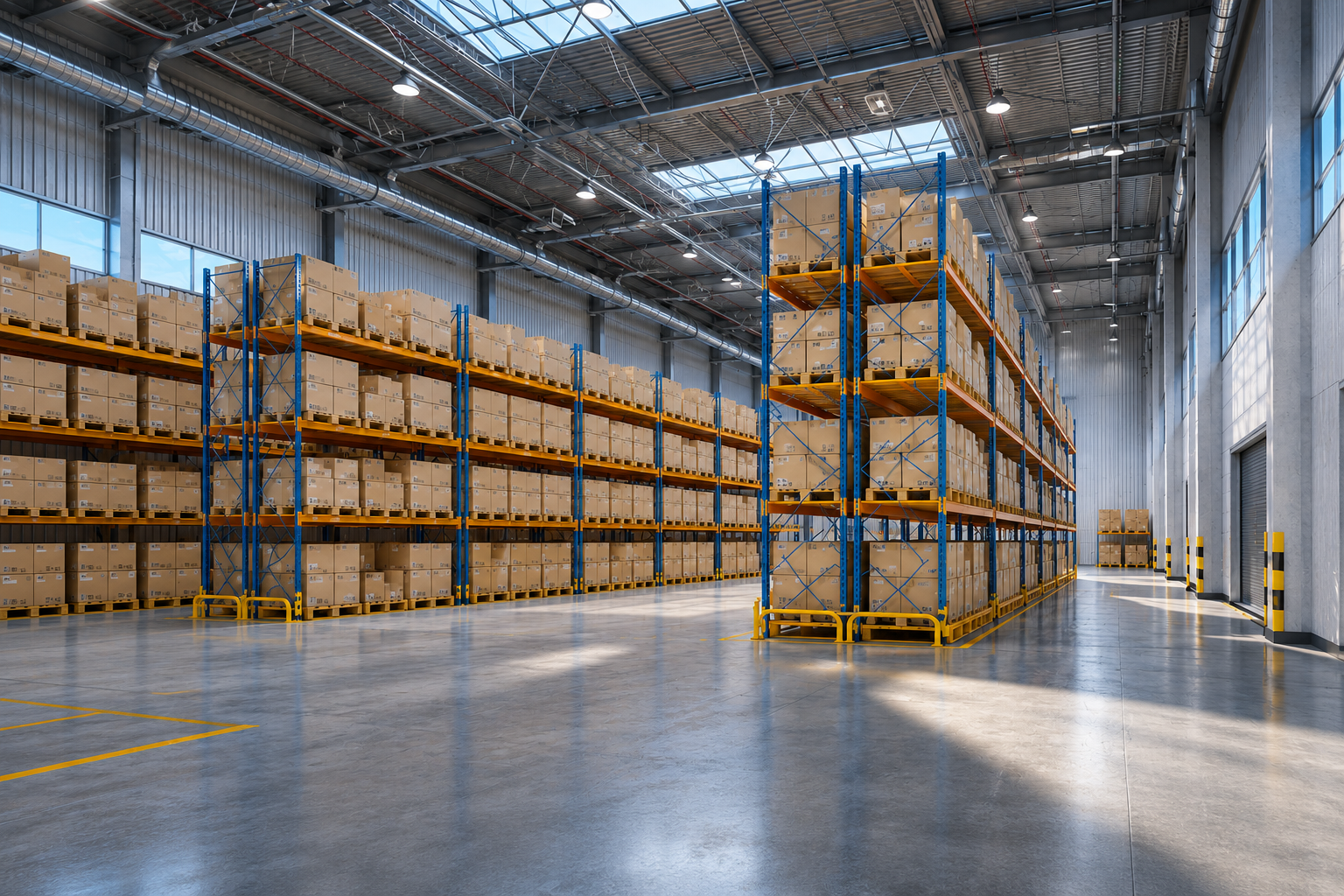

Learn how optimizing material flow reduces travel time, increases throughput, and maximizes ROI across your warehouse network.

In a high-performing warehouse, every movement counts. From the moment inventory arrives to the second an order ships, the way materials flow through your facility directly affects speed, cost, and customer satisfaction. Yet in many operations, inefficient material flow remains one of the most expensive, and most overlooked, sources of lost productivity.
When pathways are congested, storage zones poorly configured, or automation not fully integrated, even the most advanced operations can lose valuable time and throughput capacity. The good news? With the right material flow optimization strategy, these inefficiencies can be identified, measured, and systematically eliminated.
The True Cost of Poor Material Flow
Small inefficiencies compound quickly in a warehouse environment. When workers or robots spend extra seconds navigating around bottlenecks or traveling long distances between tasks, those seconds add up, costing thousands of hours and millions of dollars over time.
Common symptoms include:
- Congested aisles and travel paths that slow movement and create safety hazards.
- Unbalanced workloads where some zones are overutilized while others sit idle
- Inefficient storage placement that separates fast-moving SKUs from picking stations.
- Manual handling between automation zones that interrupts flow continuity.
Beyond the immediate labor costs, inefficient flow also impacts accuracy, safety, and employee satisfaction. Workers face higher fatigue, picking errors increase, and throughput ceilings are reached sooner than expected.
What Material Flow Optimization Really Means
Material flow optimization is more than rearranging racks or widening aisles, it’s a strategic, data-driven redesign of how goods move through your facility. It involves analyzing every step of product movement to eliminate friction and align processes with demand patterns.
An optimized flow integrates:
- Receiving-to-storage efficiency: Streamlined putaway paths that minimize double handling.
- Order picking and replenishment logic: Data-informed slotting to minimize travel and cross-traffic.
- Automation integration: Robotics and conveyors positioned for continuous, uninterrupted movement.
- Ergonomic design: Workstations and workflows built to reduce strain and increase consistency.
At its core, material flow optimization transforms a static layout into a dynamic, responsive system, one that adapts to seasonality, SKU velocity changes, and volume surges without breaking stride.
The Role of Data in Flow Design
Modern warehouse design relies on data visualization and simulation tools to model how materials actually move in real time. Using technologies like digital twins and warehouse simulation, operators can pinpoint inefficiencies before making costly physical changes.
This approach enables:
- Scenario testing: Evaluate how different layout configurations impact throughput.
- Bottleneck analysis: Identify slow zones caused by travel distance or congestion.
- Continuous improvement: Use real-time metrics to adjust workflows as demand evolves.
Data not only guides layout design but also fuels predictive decision-making, allowing teams to proactively adjust to volume spikes, staffing levels, or product mix changes.
Designing Flow for Future Growth
A key best practice in warehouse design is planning for flexibility. As automation, SKU counts, and order profiles evolve, your material flow must evolve with them.
Consider these design principles:
- Modular layouts: Create configurable zones that can expand or contract as volume shifts.
- Scalable automation: Choose robotics and systems that can grow with operational demand.
- Cross-functional pathways: Design shared traffic lanes that serve multiple workflows efficiently.
- Integrated data systems: Use your WMS as the central control point for synchronized flow.
A facility designed around flexibility doesn’t just support today’s performance, it becomes a long-term asset that grows alongside your business.
How Tompkins Solutions Optimizes Flow
At Tompkins Solutions, we specialize in engineering end-to-end warehouse design strategies that maximize material flow and operational efficiency. From facility layout modeling and automation integration to network-wide optimization, our team helps businesses eliminate bottlenecks and achieve measurable performance gains.
Our proven approach focuses on:
- Conducting in-depth material flow analysis using advanced simulation tools.
- Designing data-informed warehouse layouts that improve throughput and reduce travel time.
- Implementing flexible automation systems that adapt to real-world changes in demand.
The result is a warehouse ecosystem built for speed, safety, and scalability—one that not only meets current service expectations but is ready for the future of fulfillment.
Unlock the Full Potential of Your Warehouse
Every second counts in today’s competitive logistics landscape. Optimizing material flow isn’t just a design choice, it’s a strategic advantage.
Tompkins Solutions can help you transform your warehouse into a high-performance operation that moves smarter, faster, and more efficiently than ever before.
Connect with our experts to learn how material flow optimization can elevate your entire supply chain.


About Shaun Kelly


How can we help improve your supply chain operations?
Schedule a consultation or contact Tompkins Solutions for more information.
Featured Posts
Discover valuable resources to enhance your knowledge.

.png)