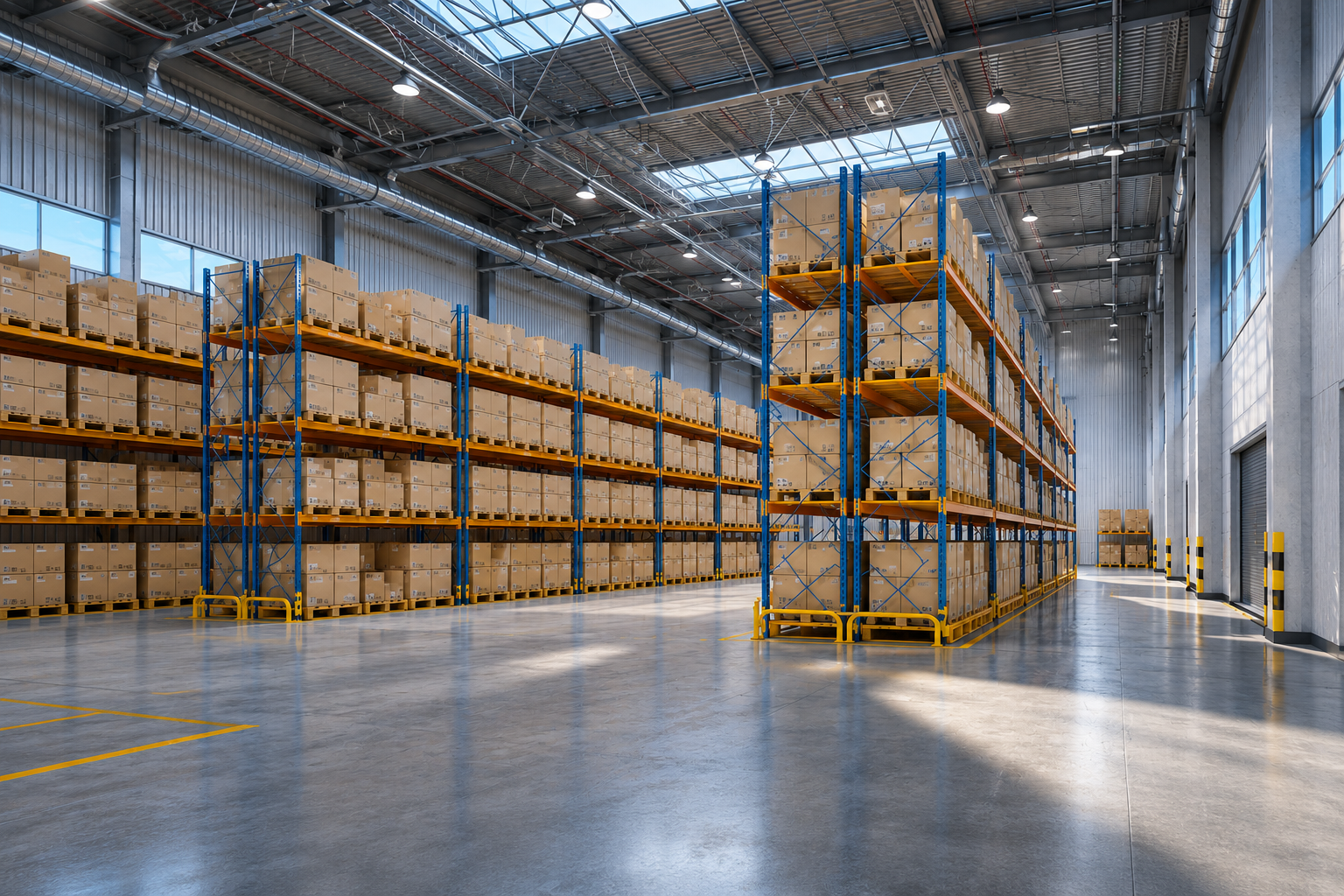


As supply chains grow more complex, many organizations are consolidating operations into single, multi-temperature distribution centers. Grocery, food & beverage, pharmaceuticals, healthcare, and omnichannel retailers increasingly require frozen, refrigerated, and ambient products to flow through the same facility.
The benefits are clear: reduced transportation costs, improved inventory coordination, faster fulfillment, and simplified network management.
But designing a multi-temperature warehouse under one roof introduces serious complexity. Temperature integrity, workflow efficiency, labor productivity, compliance, and energy management must all be carefully engineered.
Success depends on strategic design, not just refrigeration capacity.
Why Multi-Temperature Distribution Is Growing
Several market forces are driving demand for consolidated temperature-controlled facilities:
- Expansion of online grocery and direct-to-consumer food delivery
- Pharmaceutical distribution with varying storage requirements
- Retailers offering broader perishable assortments
- Pressure to reduce network redundancy and transportation costs
- Customer expectations for mixed-temperature shipments in one delivery
Operating separate buildings for each temperature band is costly and inefficient. Consolidated facilities allow inventory to be staged and shipped together, reducing touches and transit time.
However, consolidation without careful design often leads to bottlenecks, temperature risk, and operational strain.
The Core Challenge Is Balancing Temperature Integrity and Operational Flow
A multi-temperature warehouse must achieve two objectives simultaneously:
- Maintain strict environmental controls
- Preserve fast, efficient material flow
These goals can conflict if not thoughtfully engineered.
Frequent door openings, cross-zone traffic, and poor staging practices can cause temperature fluctuations. Meanwhile, over-segmentation of zones can slow fulfillment and increase travel time.
Design must create separation where necessary and connectivity where beneficial.
Strategy #1: Smart Zoning and Physical Separation
The foundation of a successful multi-temperature facility is intelligent zoning.
Rather than simply carving out large frozen, refrigerated, and ambient areas, high-performing facilities use:
- Clearly defined thermal zones based on product requirements
- Airlocks and buffer zones between temperature bands
- Insulated partitions that prevent cross-contamination
- Controlled dock environments to minimize temperature shock
Zoning should reflect both temperature needs and product velocity.
High-velocity frozen SKUs, for example, should not be placed deep within a zone that requires excessive travel. Aligning temperature zoning with pick frequency supports both compliance and speed.
Strategy #2: Minimize Cross-Zone Travel
Cross-zone movement is one of the biggest risks in multi-temperature operations.
Every time product moves between frozen, refrigerated, and ambient areas, it increases:
- Exposure risk
- Door cycling
- Energy loss
- Congestion
Design strategies that reduce cross-zone travel include:
- Dedicated pick modules within each temperature band
- Consolidation zones positioned adjacent to, not inside, thermal areas
- Workflow sequencing that limits backtracking
- Separate replenishment routes per temperature zone
The goal is to keep products and people moving logically without unnecessary transitions.
Strategy #3: Dock Design That Supports Mixed Shipments
Outbound dock design is critical in consolidated facilities.
Mixed-temperature orders require coordinated staging and loading. Without proper dock planning, facilities face:
- Temperature fluctuations during staging
- Delays waiting for full order consolidation
- Increased dwell time outside controlled environments
Effective dock strategies include:
- Segregated dock doors for frozen, refrigerated, and ambient
- Temperature-controlled staging zones
- Cross-dock areas for rapid consolidation
- Efficient lane design to prevent congestion
Dock flow must support the final mile while protecting product integrity.
Strategy #4: Energy-Efficient Infrastructure
Multi-temperature warehouses are energy-intensive. Poor design can significantly increase operating costs.
Energy-smart strategies include:
- Compact thermal footprints to reduce cubic footage
- High-speed insulated doors to limit air exchange
- Strategic refrigeration system placement
- Vertical storage solutions to maximize cubic efficiency
- Airflow management that avoids overcooling
Balancing energy efficiency with operational performance protects long-term profitability.
Strategy #5: Labor Optimization in Cold Environments
Cold zones present labor challenges. Worker fatigue, safety concerns, and productivity fluctuations must be addressed through design.
Effective approaches include:
- Ergonomic pick faces to reduce strain
- Logical SKU placement to limit time spent in extreme temperatures
- Clear visual management systems
- Consolidated work zones that minimize unnecessary exposure
Some facilities also design rotational workflows so employees spend limited time in frozen areas while maintaining productivity.
When layout reduces friction, labor efficiency improves across all temperature zones.
Strategy #6: Integrated Systems for Visibility and Control
Multi-temperature distribution requires real-time visibility across zones.
Integrated systems support:
- Temperature monitoring throughout storage and staging
- Inventory tracking by zone and condition
- Coordinated wave planning across temperature bands
- Automated alerts for compliance risks
Disconnected systems create blind spots that can lead to spoilage, compliance violations, or delayed shipments.
An integrated technology framework ensures operational alignment from receiving through outbound loading.
Strategy #7: Designing for Scalability
SKU growth and demand variability are especially pronounced in multi-temperature operations.
Facilities must be designed to:
- Expand frozen or refrigerated zones as demand shifts
- Add automation without disrupting airflow or insulation
- Support future equipment loads
- Reconfigure pick modules as order profiles evolve
Rigid designs quickly become operational constraints. Modular layouts and scalable infrastructure preserve flexibility while maintaining compliance.
Common Pitfalls in Multi-Temperature Warehouse Design
Organizations often encounter challenges when consolidation is approached without strategic planning.
Common issues include:
- Underestimating refrigeration capacity requirements
- Poor alignment between temperature zones and material flow
- Inadequate dock staging for mixed orders
- Overlooking labor ergonomics in cold zones
- Designing for current demand without future growth modeling
Avoiding these pitfalls requires integrated engineering expertise.
The Strategic Advantage of Expert-Led Design
Designing multi-temperature distribution centers under one roof is not simply a construction project, it is a systems engineering challenge.
Success depends on aligning:
- Facility layout
- Refrigeration infrastructure
- Material flow
- Labor strategy
- Technology integration
- Growth planning
At Tompkins Solutions, we take a holistic approach to multi-temperature warehouse design. By analyzing demand profiles, SKU velocity, regulatory requirements, and long-term growth projections, we create facilities that protect product integrity while maintaining high throughput.
Our engineering-led process ensures that temperature control, compliance, and operational efficiency work together, not against each other.
Turning Complexity Into Operational Advantage
When designed correctly, multi-temperature distribution offers significant benefits:
- Reduced transportation costs
- Faster order consolidation
- Improved inventory visibility
- Better space utilization
- Enhanced customer service
Instead of operating separate facilities for each temperature band, organizations gain coordination, speed, and scalability within one optimized footprint.
Complexity becomes manageable and even advantageous.
Multi-temperature distribution under one roof is becoming the new standard across food, beverage, grocery, and pharmaceutical supply chains.
But consolidation only delivers value when the facility is engineered intentionally.
Temperature integrity, workflow efficiency, labor productivity, and compliance must be integrated into the design from the start.
If your organization is considering consolidation or struggling with performance in an existing multi-temperature facility, now is the time to evaluate your design strategy.
At Tompkins Solutions, we help organizations develop high-performance distribution centers that balance temperature control, operational speed, and long-term scalability, all under one roof.
Learn more at: https://www.tompkinsinc.com/


About Shaun Kelly


How can we help improve your supply chain operations?
Schedule a consultation or contact Tompkins Solutions for more information.

Featured Posts
Discover valuable resources to enhance your knowledge.


.png)