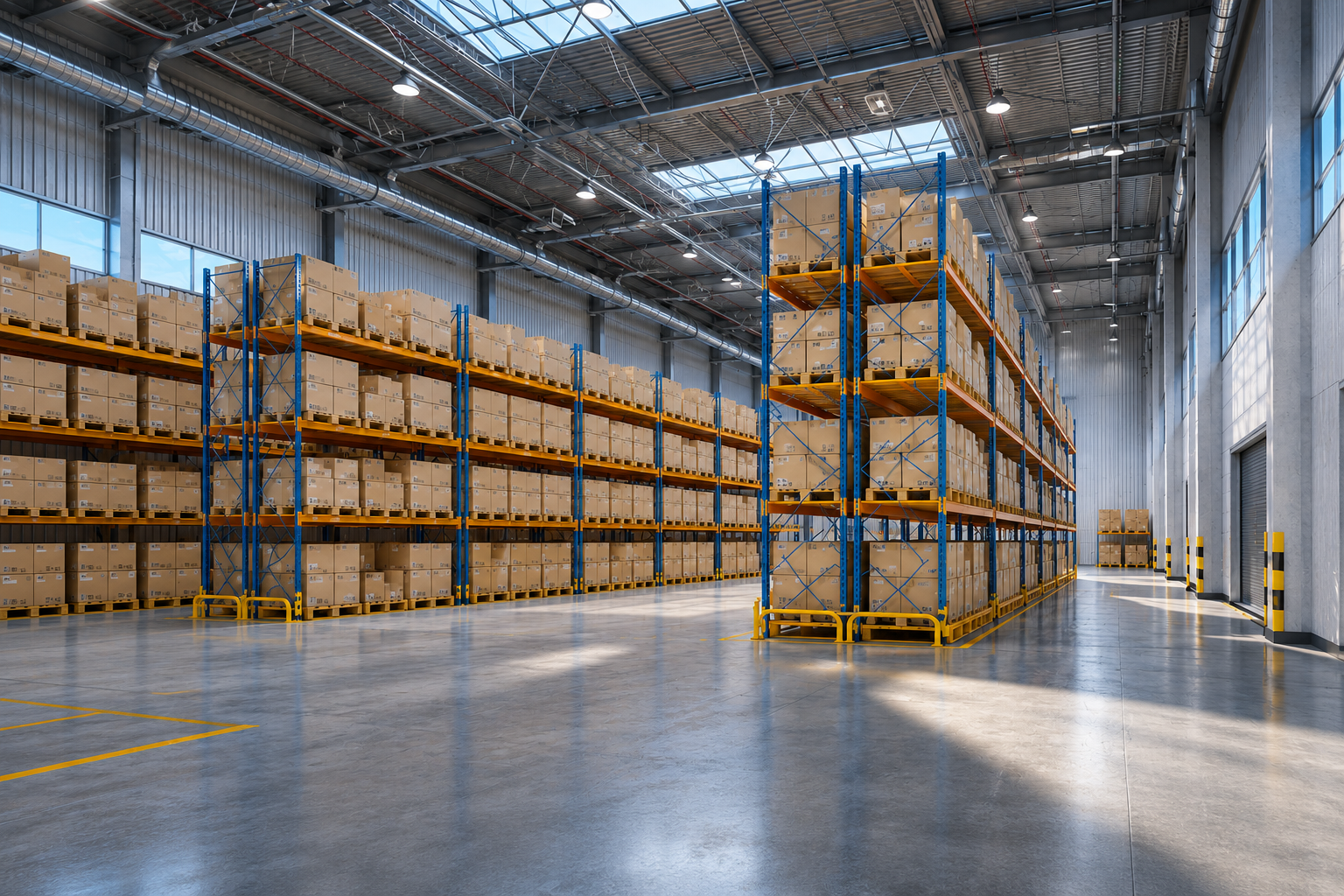

Future-Proofing Warehouse Automation: Building Scalable Systems That Grow with Your Business.

Key Takeaways:
- Scalable warehouse automation enables businesses to expand operations without repeatedly redesigning their distribution centers.
- Modular automation technologies provide flexibility to adapt as order volumes, product lines, and fulfillment channels evolve.
- Successful automation strategies combine equipment, software, and data into an integrated ecosystem that supports long-term growth.
- Planning for scalability from the beginning reduces future implementation costs, minimizes operational disruption, and improves return on investment.
- Tompkins Solutions helps organizations design, integrate, and support future-ready warehouse automation systems that evolve alongside changing business needs.
Introduction
Warehouse automation has become a strategic priority for organizations seeking to improve efficiency, reduce labor dependency, and meet growing customer expectations. Yet one of the biggest challenges facing decision-makers isn't whether to automate its how to ensure today's investment remains valuable years from now.
Business conditions rarely stay the same. Companies introduce new products, expand into additional markets, add fulfillment channels, and experience fluctuations in demand. What works for today's operation may no longer be sufficient tomorrow if automation systems lack the flexibility to grow alongside the business.
Too often, organizations implement automation to solve an immediate operational challenge without considering future scalability. The result is equipment that performs well initially but becomes a constraint as the business evolves, leading to expensive upgrades, complex retrofits, or even complete system replacements.
A future-ready warehouse is built differently. It combines scalable automation technologies, intelligent software, and thoughtful engineering to create an operation that can adapt to changing business requirements without disrupting productivity.
Scalable warehouse automation isn't simply about adding more equipment, it's about designing systems that continue delivering value as your organization grows.
Why Scalability Has Become a Business Imperative
Supply chains today are more dynamic than ever before. Customer expectations, market conditions, and product demand can shift rapidly, requiring distribution centers to respond with greater speed and flexibility.
Organizations commonly experience changes such as:
- Expanding product portfolios
- Increased order volumes
- Omnichannel fulfillment requirements
- New customer segments
- Seasonal demand fluctuations
- Geographic market expansion
- Acquisitions and mergers
- Evolving service level expectations
Warehouse automation that is designed only for current operating conditions may struggle to accommodate these changes efficiently.
Scalable automation provides organizations with the flexibility to increase capacity, introduce new technologies, and adapt workflows without requiring major operational disruptions or complete system overhauls.
Planning for future growth from the outset helps businesses avoid costly reinvestments while ensuring their warehouse remains a competitive advantage for years to come.
Characteristics of a Scalable Warehouse Automation System
Scalability goes beyond simply installing automation equipment. It involves creating an adaptable operational framework where technology, software, and facility design work together to support long-term business objectives.
A scalable warehouse automation strategy typically includes:
- Modular equipment that can expand as demand increases
- Flexible warehouse layouts
- Integrated software architecture
- Standardized communication between systems
- Data-driven operational visibility
- Infrastructure designed for future expansion
- Phased implementation capabilities
Rather than treating automation as a one-time project, organizations should view it as an evolving ecosystem that grows alongside the business.
Choosing Modular Automation Technologies
One of the most effective ways to future-proof warehouse operations is by investing in modular automation solutions.
Unlike fixed systems that require extensive redesign when business needs change, modular technologies allow organizations to expand incrementally while minimizing disruption.
Autonomous Mobile Robots (AMRs)
AMRs are designed with scalability in mind.
As order volumes increase, additional robots can often be added without major facility modifications or extensive downtime.
Their flexibility allows organizations to:
- Increase transport capacity
- Support changing workflows
- Adapt warehouse layouts
- Handle seasonal demand spikes
- Expand operations into new areas
This makes AMRs particularly valuable for businesses experiencing continuous growth.
Modular Conveyor Systems
Modern conveyor solutions are increasingly built using modular components.
Additional conveyor sections, merge points, divert systems, and accumulation zones can be incorporated as operational requirements evolve.
Instead of replacing the entire material handling system, organizations can expand targeted areas where capacity improvements are needed.
This phased approach helps control costs while supporting continuous operational improvement.
Automated Storage and Retrieval Systems (AS/RS)
Scalable AS/RS solutions enable businesses to increase storage density while maintaining high inventory accessibility.
Many systems are designed to accommodate:
- Additional storage aisles
- Increased inventory capacity
- New product categories
- Higher throughput requirements
By planning for expansion during the initial design phase, businesses can support future growth without extensive structural changes.
The Critical Role of Software Integration
Automation equipment delivers its greatest value when supported by intelligent software.
Without effective integration, even advanced technologies can operate independently, creating disconnected workflows and limiting overall efficiency.
A scalable warehouse technology ecosystem typically includes:
- Warehouse Management Systems (WMS)
- Warehouse Execution Systems (WES)
- Warehouse Control Systems (WCS)
- Enterprise Resource Planning (ERP) platforms
- Transportation Management Systems (TMS)
- Robotics management software
- Real-time analytics platforms
When these systems communicate seamlessly, organizations gain end-to-end visibility across warehouse operations, enabling faster decision-making, improved inventory accuracy, and optimized resource utilization.
Integrated software also simplifies future expansion by allowing new technologies to connect with existing systems rather than requiring entirely new software environments.
Designing for Flexibility Instead of Capacity Alone
Many warehouse automation projects focus primarily on meeting current throughput targets. While achieving immediate operational improvements is important, designing exclusively around today's requirements can limit future growth.
Instead, organizations should consider questions such as:
- Can additional automation be added without disrupting operations?
- Is there room to expand storage capacity?
- Will the software support future technologies?
- Can workflows adapt to changing order profiles?
- Does the facility layout accommodate future equipment?
Answering these questions during the planning phase helps ensure that automation investments continue delivering value as business needs evolve.
A flexible warehouse is better equipped to respond to market changes, customer expectations, and operational challenges without requiring costly redesigns or lengthy implementation projects.
Contact Tompkins Solutions to learn how cold chain warehouse automation can improve throughput, reduce labor dependency, and strengthen food safety compliance in your distribution operation.


About Shaun Kelly


How can we help improve your supply chain operations?
Schedule a consultation or contact Tompkins Solutions for more information.
Featured Posts
Discover valuable resources to enhance your knowledge.

.png)